
What Dental Disease in Dogs and Cats Actually Costs and Why Early Detection Changes the Number
By AVDC
Many pet owners receive a treatment estimate expecting a routine cleaning fee, only to find a number that is much higher than they had budgeted for. That surprise is common, and in most cases it comes down to one thing: how much disease was already present, quietly, before anyone had a reason to look for it.
Why the Same Procedure Can Come With Very Different Price Tags
A dental estimate is not a flat fee. It reflects what a veterinarian expects to find and treat once a pet is safely under anesthesia, and that can vary a great deal from one animal to the next. Once dental radiographs are taken, some pets need little beyond a thorough cleaning and evaluation. Others need multiple extractions, oral surgery, or deep subgingival scraping and cleaning, and each of those adds time, expertise, and cost. In practice, the number on an estimate says less about a clinic’s pricing and more about how much disease the veterinarian anticipates finding in that particular mouth.
How Dental Disease Tends to Progress Over Time
Veterinary dental researchers generally describe periodontal disease, one of the most common conditions found in dogs and cats, as a chronic and progressive disease. This means that the disease, once established, progresses through recognizable stages over time. Periodontal disease typically starts as gingivitis or inflammation of the gum tissue. Published research suggests that gingivitis alone can be reversible with treatment. When left alone, that gum inflammation can advance into periodontitis, where the bone and tissue holding a tooth in place begin to break down. Veterinary dental guidelines note that once meaningful bone loss has occurred, it is unlikely to reverse, although the disease can still be managed going forward. Every pet’s timeline for disease progression looks a little different, but this general pattern helps explain why postponing a dental evaluation can lead to a more involved treatment plan later.
What a Visual Exam Alone Can Miss
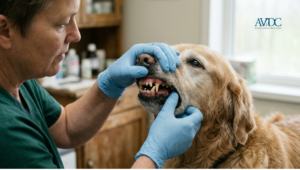
One of the more striking findings in veterinary dental research is how much dental disease can hide beneath the gumline inside the jawbone, giving the appearance of a mouth that looks “just fine” at first glance. In a study published in the American Journal of Veterinary Research, Verstraete and colleagues found clinically significant dental disease on x-rays in 28 percent of dogs and 42 percent of cats who had teeth that appeared normal to the naked eye. In other words, a mouth that looks unremarkable at first glance can still be hiding infection or bone loss well below the gumline, which is a large part of why full mouth dental radiographs, not a visual evaluation alone, have become a standard part of a thorough dental evaluation. This is also why treatment estimates can change drastically after dental radiographs are performed, since the bulk of the disease is below the gumline and only identified after imaging.
Why Early Assessment Tends to Change the Number
This is where timing plays a real role in financial cost, though maybe not in the way most owners expect. Catching gingivitis or early periodontal changes often allows for a more limited procedure, sometimes paired with better home care and closer monitoring between veterinary visits. Delaying care until there is visual evidence of disease means that the disease is likely more advanced, which can mean more extractions, longer anesthesia time, and a more involved surgical plan. Research cannot promise that earlier evaluation will lower the bill for every pet, but it does suggest that dental disease tends to become more resource-intensive to treat the longer it goes unaddressed. Seen that way, a routine dental checkup has less to do with avoiding an expense and more to do with managing oral disease while it is still early in the disease process.
What Owners Can Do Between Veterinary Visits
Home care plays a critical role in maintaining oral health and preventing disease progression. Daily tooth brushing is one of the most effective ways to prevent or minimize accumulation of plaque and tartar on the tooth surface and to reduce gum inflammation (Harvey et al). Additionally, dental-specific diets, daily oral health chews, water additives, and various other products carrying the Veterinary Oral Health Council seal are additional tools that help slow the buildup of plaque and tartar. None of these replace a professional evaluation and cleaning, but they can support oral health during the time between veterinary visits, particularly for pets already showing early signs of periodontal disease.
Where to Start
For most pets, dental care starts with a primary care veterinarian, who can check the mouth during a wellness visit and recommend next steps. When a case involves more advanced disease, such as significant bone loss, oral mass or gum abnormalities, a misaligned bite, or a tooth fracture, a primary care veterinarian may suggest referral to a Board Certified Veterinary Dentist® for a closer look and more specialized treatment. Pet owners searching for a veterinary dentist near them can use the AVDC’s directory of Diplomates to find a Board Certified Veterinary Dentist® in their area. Every case is different, and no article can predict exactly what a specific pet will need, but understanding how dental disease tends to progress can make an estimate easier to make sense of, and make it easier to decide when to act.
Disclaimer: This article is intended for educational purposes and should not replace professional veterinary advice. Pet owners should consult their veterinarian to determine the most appropriate dental care for their individual animal.
About the American Veterinary Dental College® (AVDC®): The American Veterinary Dental College® is the recognized certifying organization for veterinary dentistry specialists. The College advances animal oral health through rigorous credentialing, evidence-based standards, and the promotion of excellence in veterinary dental education, research, and patient care.
Verstraete FJ, Kass PH, Terpak CH. Diagnostic value of full-mouth radiography in dogs. Am J Vet Res. 1998;59(6):686-691. PMID: 9622735. Verstraete FJ, Kass PH, Terpak CH. Diagnostic value of full-mouth radiography in cats. Am J Vet Res. 1998;59(6):692-695. PMID: 9622736.
Harvey C, Serfilippi L, Barnvos D. Effect of Frequency of Brushing Teeth on Plaque and Calculus Accumulation, and Gingivitis in Dogs. J Vet Dent. 2015 Spring;32(1):16-21. doi: 10.1177/089875641503200102. PMID: 26197686.